Red Imported Fire Ants: Why Eradication Matters
The Current Situation
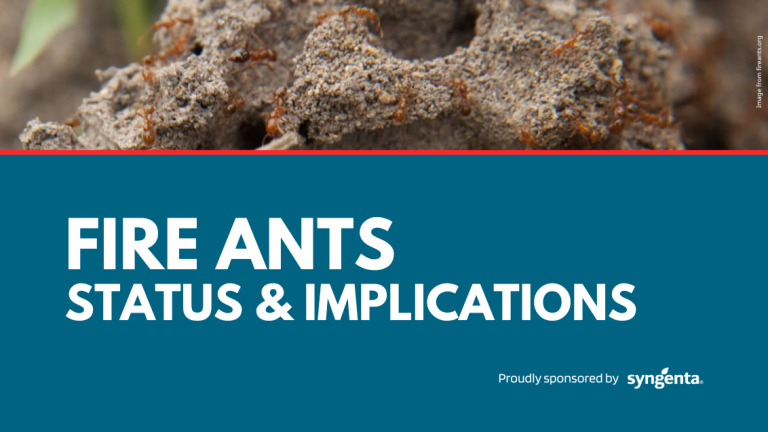
Red Imported Fire Ants (RIFA) continue to spread across southeast Queensland and into parts of northern New South Wales.
Recent detections, including at Moogerah in the Scenic Rim region of Queensland on November 4, 2025, shows how quickly the devastating pest is moving into new areas.
RIFA were first detected in Brisbane in 2001, and with an estimated 95% of Australia offering suitable habitat, the pest threatens agriculture, ecosystems and communities, potentially costing the economy up to $2 billion a year if left unchecked.
What Australians are Saying
A national poll commissioned by Syngenta (November 2025, n= 3,600) shows rising public concern:
- 75% of respondents are concerned about the spread of RIFA
- 61% of respondents prefer eradication over containment
- 78% agree Governments should do more before the situation gets worse.
These results highlight community expectations for stronger action, faster, to stop Red Imported Fire Ants before they reach new regions.
The Impact
RIFA are aggressive and highly destructive:
- Their sting can cause severe allergic reactions in people and animals, leading to death for some native species
- Nesting damages pastures, lawns, electrical systems and farm equipment
- Infestations disrupt daily life, reduce land productivity, and threaten native species.
Communities, councils, and industries across affected regions are already feeling the cost and the risk continues to grow.
Australia’s War on RIFA: Eradication Versus Containment
Eradication involves sustained, coordinated actions across government, industry and communities to eliminate established populations and prevent further incursions.
Containment focuses only on limiting spread, allowing infestations to persist and expand over time.
Australia’s RIFA response is led by the National Fire Ant Eradication Program, which aims to remove the pest completely rather than simply slow it’s spread.
In Australia, two kinds of granular RFIA treatments are approved to be used: insect growth regulator and a fast-acting insecticide.
Both products are delivered as bait. They consist of small pieces of corn grit soaked in soybean oil, each containing different active ingredients.
The ingredient used depends on the property, and whether the ants pose an immediate threat to people or animals.
Foraging ants collect the granules and take them back to the colony. When the ants consume the granules, the active ingredients circulate through the colony and go to work. This kills off the worker ants, larvae, and the queen.
The granules are small enough for fire ants to collect and sink low into grass or the nest. Any uncollected granules will break down within days.
The amount of active ingredient is enough to affect fire ants but is too small to affect plants, animals, or people.
Insect growth regulator
Insect growth regulator (IGR) treatment contains 5 grams per kilogram of Pyriproxyfen or S-methoprene. These ingredients are used in household and agricultural pest control products, such as fly spray and pet flea tablets.
This treatment prevents the fire ant queen from producing viable and reproductive offspring. As the last adult worker ants die, the queen starves because there are no ants left to feed her.
Growth regulators work more slowly by preventing reproduction, with control taking weeks.
Fast-acting insecticide
Fast-acting insecticide (FAI) contains either:
- indoxacarb
- a combination of Hydramethylnon and Pyriproxyfen.
These active ingredients are found in cockroach baits or flea collars.
After eating the insecticide, worker ants spread the active ingredient around the colony. This ingredient kills the worker ants, larvae, and the queen over 3 to 10 days.
If eradication is the national objective, then the most effective control options that kill RIFA nests faster are the best control option.
The majority of Australians support eradication.
Treatment in Action
Different control programs, States and Local Government Councils have different preferences for either growth regulators (containment) or fast acting insecticides.
For example, The Queensland Fire Ant Suppression Taskforce (FAST) and partner programs use integrated treatment methods, including:
- Baiting programs using products such as ADVION® Fire Ant Bait (indoxocarb), which achieves full colony control within 72 hours and its targeted mode of action limiting impact on other species
- Targeted surveillance and direct nest treatment in new outbreak areas
- Community reporting and rapid response to support early detection.
For people who manage the farms, sporting fields, school ovals and playgrounds and public parks infested by RIFA, the fastest and most effective control is preferred.