Managing the Challenge of Plant Parasitic Nematodes in Turf
By Michael Bradbery MA Ag. Turf – Technical Services Manager, Turf & Landscape ANZ
Plant parasitic nematodes are a major turf management challenge and typically become a long term issue. They are easily moved in soil, turf or on equipment and once on site are almost impossible to eradicate. This is a reminder of the importance of hygiene when it comes to movements of these kinds with investigation on the risk of nematodes or other pests and disease from source locations definitely worthwhile.
A BRIEF BACKGROUND
In a sub-surface situation, one of the threats impacting healthy and resilient turf stands can be parasitic nematodes: microscopic roundworms that feed on the roots of turfgrass plants. These pests can cause significant damage, leading to thinning turf, yellowing, wilting, and even plant death in severe infestations. Parasitic nematodes are a widespread problem, found in soils across the globe with around 15% of nematodes described as parasitic. Some of the most common and destructive species that affect turf and crop systems globally include root-knot nematodes, lance nematodes and sting nematodes. These nematodes feed by puncturing and extracting nutrients from the plant cells, causing physical damage, and disrupting the plant's ability to take up water and nutrients.
In Australia, the most damaging nematode in turf systems is the Southern Sting nematode (Ibipora lolii) which is now present in a number of states including around Newcastle, Sydney and Perth. Regarding pathogenicity (the ability of an organism to harm the host), Stirling (2023) categorized Australian turf nematodes on a scale of 1 to 10. According to the scale, Southern Sting is identified as the most damaging nematode pest of turf, while the others cause low to moderate levels of damage.
Pathogenicity of Nematodes in Australian Turf | Scale 1 – 10 (10 being the Most Severe) |
Southern Sting | 10 |
Root Knot, Lance, Cyst, Needle, Dagger, Stubby | 5 |
Lesion, Stunt, Ring, Sheath | 3 |
Spiral | 1 |
Table 1: Diagnosis of Disease Problems in Turfgrass Caused by Plant Parasitic Nematodes. Free-living and other beneficial nematodes: an important component of the soil biological community. Stirling, G. January 2023.
Managing nematode infestations can be a challenging task due to their microscopic size, ability to survive in various soil conditions, mobility and difficulty in detecting their presence until significant damage has already occurred. The standard practice for identifying nematode populations involves sampling suspected areas and submitting these samples to an accredited laboratory for a population count.
Formal identification through sample submission is a useful initial step when devising a management program. However, counts that are provided should be treated as a guide only and assessed along with root health and turf performance. Plant parasitic nematodes can be separated into two groups: ectoparasitic and endoparasitic. Ectoparasitic nematodes do not normally enter the root and feed from outside the root surface whilst endoparasitic nematodes enter the root and feed from within. Both types of nematodes can exhibit either migratory behavior, allowing free movement within the soil or plant, or sedentary behavior, meaning they remain stationary once on or within a root.
Parasitic nematodes like the Southern Sting feed on emerging root systems. In warm seasons, population levels of turf damaging species will typically increase in spring and autumn. The Southern Sting nematodes feed by inserting their long stylet into the root, injecting an enzyme that breaks down the cell contents, which are then sucked back through the stylet. Symptoms of turf nematode damage can be twofold, both on the surface and subsurface. On the surface, turf will appear thinned, with chlorosis evident and declining growth. Patches will appear irregular, can wilt and not respond to fertility or other inputs. Subsurface, the root system will be affected. Roots will be stunted, short with stubby tips and fewer fine feeder roots and may show presence of galls. Affected root tips cease growing with above ground symptoms of both nutrient and moisture deficiency with wilt occurring. As the turf root system is weakened it becomes easier for other pathogens (such as Pythium) to infect the plant along with other concerns during the summer period. Persistent root pathogen damage and difficulty in control can be a result of ongoing root damage from Nematodes.
NEMATODE MANAGEMENT
Should the decision be made to apply a nematicide for outbreaks of Southern Sting, then Syngenta offers a rotation programme between AGADOR® Turf nematicide and miticide and the new TREFINTI® Turf nematicide. AGADOR® is a Group 6 turf nematicide and miticide consisting of 20 g/L abamectin. Whilst there are other abamectin based nematicides available for use, what sets AGADOR® apart is the unique iron chelate which encapsulates the active. Abamectin on its own will fix strongly onto organic matter in profiles, meaning the product applied for parasitic nematodes around the rootzone such as Southern Sting may not reach the required target zone effectively. Chelates remove the associated charge and the iron chelate used in AGADOR® reduces the risk of fixation. This unique formulation ensures even and consistent delivery of the active into the profile where nematodes are present.
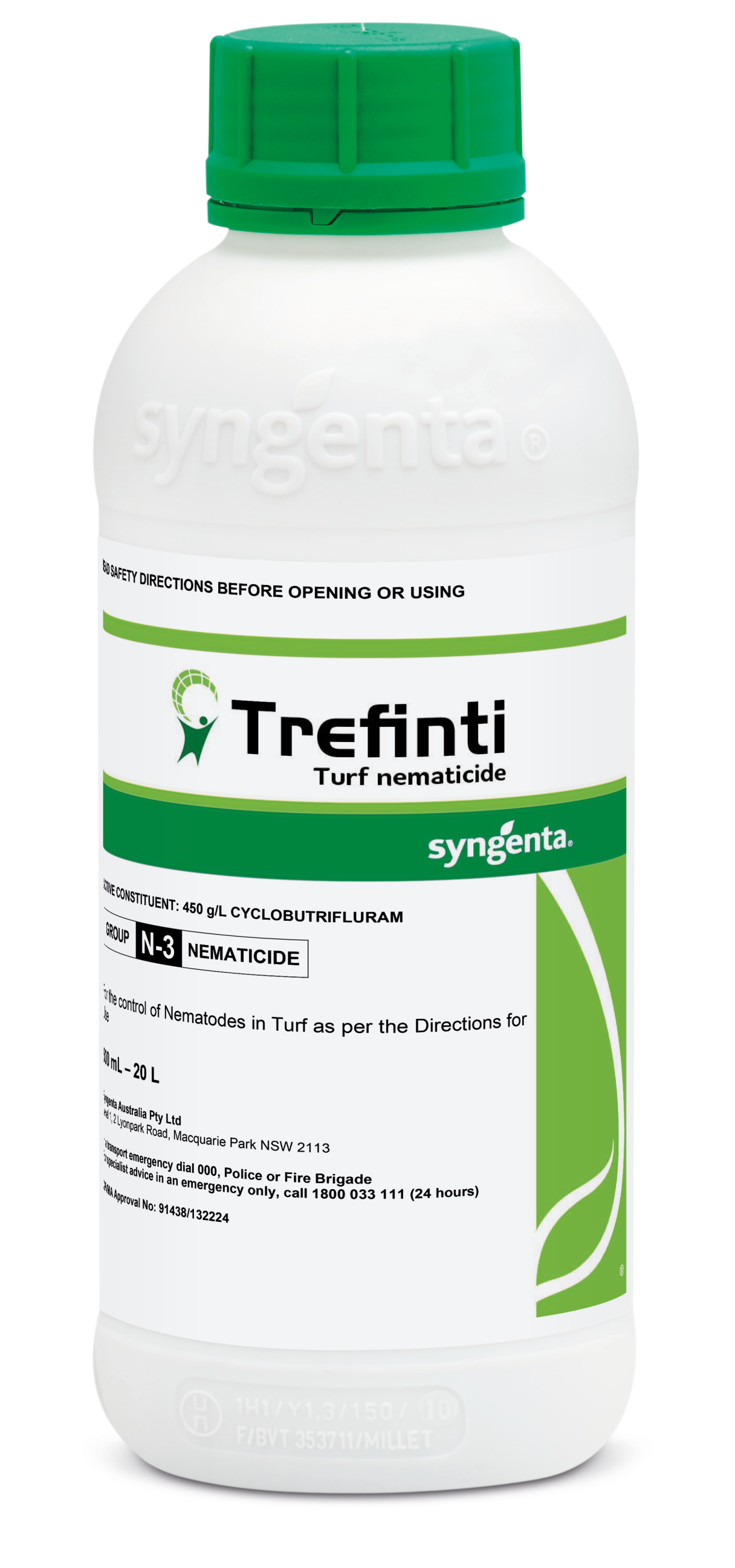
TREFINTI® Turf Nematicide introduces a new active to the industry and continues Syngenta’s innovation in developing new chemistry molecules specific for a wide range of challenges. TREFINTI® is a N3 turf nematicide consisting of 450 g/L cyclobutrifluram in an unscheduled (S0) formulation. TREFINTI® exhibits contact activity to both ectoparasitic and endoparasitic nematodes and once in the plant, moves acropetally (upwardly mobile). TREFINTI® also provides excellent flexibility in nematode management with its UV profile, meaning it can be applied during the day and watered in later in the evening. With an extensive list of plant parasitic nematodes managed, TREFINTI® offers flexibility and rotation ability in an integrated nematode management program.
A recommended program is to apply AGADOR® in spring when soil temperatures are ideal for new root initiation. For cool season greens around 12-16 degrees Celsius. These temperatures coincide with the hatching of juvenile nematodes. A follow up application of AGADOR® two weeks later will knock down numbers to protect new root growth. Two monthly applications of TREFINTI® to follow the AGADOR® application will protect roots through the crucial three month spring period of root development. If necessary a further application of AGADOR® may be required prior to peak summer stress. Depending on your location and previous site history repeating the spring program going into autumn from March through May will give good root protection well into the winter months.
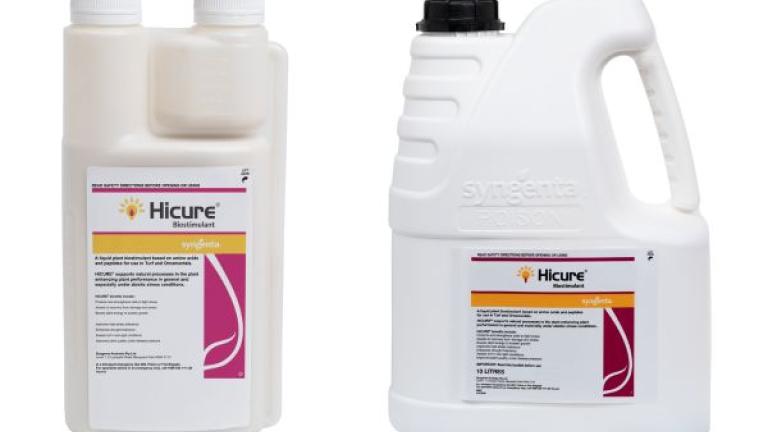
For those managing turf affected by Nematodes or other conditions causing stress, Amino Acids will assist the plant to cope with and recover from the stress condition. When it comes to turf managed for sporting use stress resulting from heat, drought, shade, disease, traffic etc. is all too frequent. When the plant is placed under stress its production of essential amino acids and the proteins that result is impacted. Applying a product like Syngenta’s HICURE® Biostimulant, which is 62% amino acid will ensure the plant has adequate proteins to cope, recover and repair.
Effective nematode management often requires an integrated approach, combining multiple strategies tailored to the specific conditions and severity of the infestation. Regular monitoring and early detection are crucial to prevent severe damage and implementing control measures in a timely manner. By understanding the challenges posed by parasitic nematodes and employing appropriate management strategies, turf professionals can maintain healthy, resilient turf stands and minimize the impact of these microscopic pests.
For more information contact your local Territory Sales Manager.
Always read the label before use. Syngenta Australia Pty Ltd, Level 1, 2 Lyonpark Road, Macquarie Park NSW 2113. ABN 33 002 933 717. ®Registered trademark of Syngenta Group Company. All products written in uppercase are registered trademarks of a Syngenta Group Company. © 2025 Syngenta. ED 25-334.